


Life Botanics Pure Marine Collagen Peptides 150g
Couldn't load pickup availability
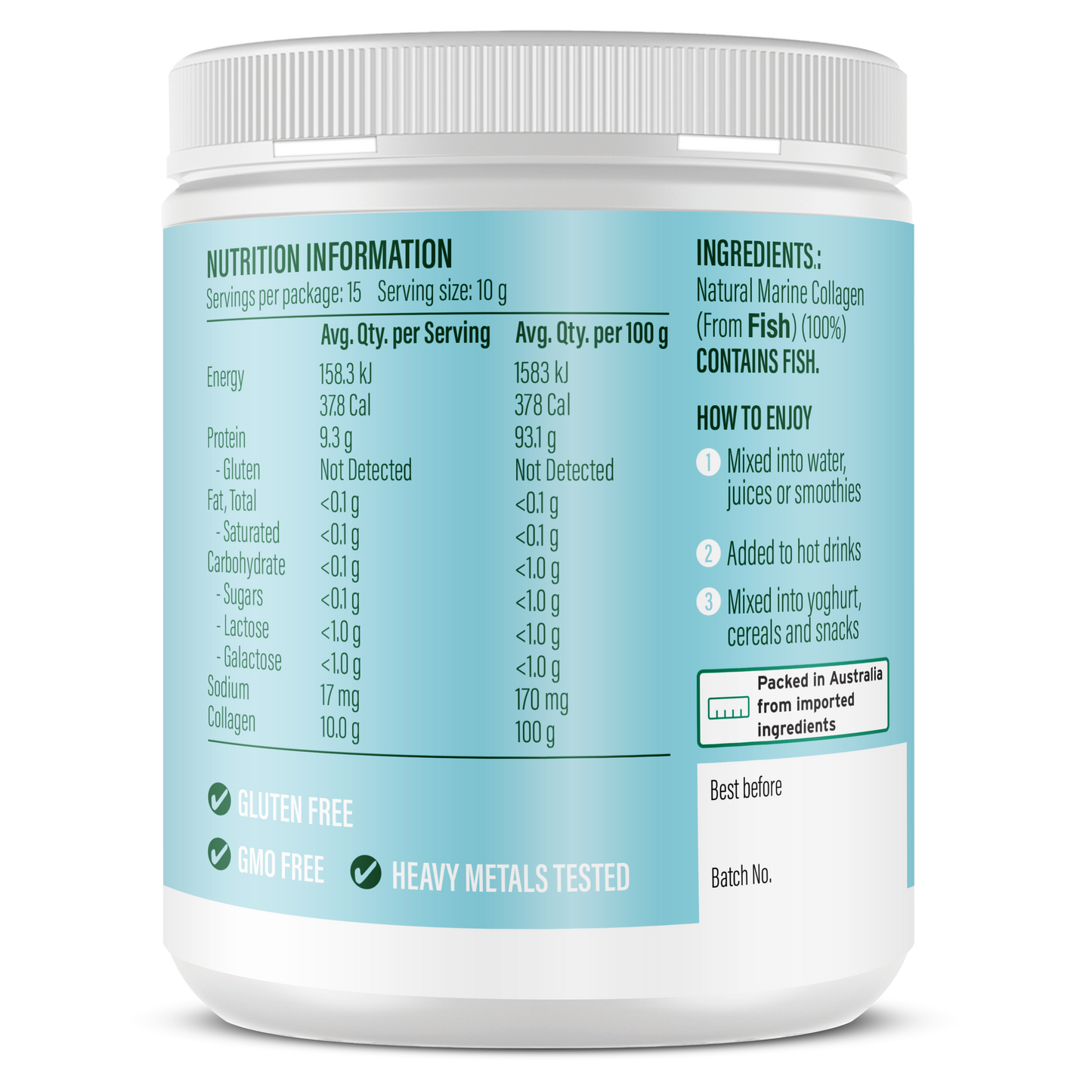
Nutrition Information
| Servings per package: 15 | ||
| Serving size: 10 g | ||
| Avg. Qty. per Serving | Avg. Qty. per 100 g | |
|---|---|---|
| Energy | 158.3 kJ (37.8 Cal) | 1583 kJ (378 Cal) |
| Protein | 9.3 g | 93.1 g |
| - Gluten | Not Detected | Not Detected |
| Fat, Total | <0.1 g | <0.1 g |
| - Saturated | <0.1 g | <0.1 g |
| Carbohydrate | <0.1 g | <1.0 g |
| - Sugars | <0.1 g | <1.0 g |
| - Lactose | <1.0 g | <1.0 g |
| - Galactose | <1.0 g | <1.0 g |
| Sodium | 17 mg | 170 mg |
| Collagen | 10.0 g | 100 g |
Ingredients: Natural Marine Collagen (From Fish) (100%)
Contains Fish.
How to Enjoy
1. Mixed into water, juices or smoothies
2. Added to hot drinks
3. Mixed into yoghurt, cereals and snacks
Packed in Australia from imported ingredients
✔ Gluten Free ✔ GMO Free ✔ Heavy Metals Tested
FAQs
FAQs
How do I take Marine Collagen Peptides?
Mix 10g (one scoop) into 200mL of water, juice, a hot drink, or yoghurt and consume immediately.
Is Marine Collagen Peptides gluten free?
Yes. It's Gluten Free, GMO Free and Heavy Metals Tested, made from 100% natural marine collagen sourced from fish. Contains fish.
What is marine collagen sourced from?
Marine collagen comes from fish — typically the skin and scales, a byproduct of the fishing industry rather than a separately farmed source. It's naturally rich in Type I collagen, the same type that makes up around 90% of the collagen in human skin, which is why it's popular in skin, hair and nail formulas.
What are collagen types, and what does "hydrolysed" mean?
There are around 28 recognised types of collagen, but Types I, II and III make up the vast majority in the human body. Type I is the most abundant — found in skin, tendons and bone. Type II is mainly in cartilage and joints. Type III is often found alongside Type I in skin and blood vessels. "Hydrolysed" simply means the collagen has been broken down into smaller peptide chains through a process called hydrolysis, which makes it easier for the body to digest and absorb than whole collagen protein.


- 5 stars: 14 (93%)
- 4 stars: 1 (7%)
- 3 stars: 0 (0%)
- 2 stars: 0 (0%)
- 1 star: 0 (0%)
Love this product always buy it but it has been unavailable for sometime now
Haven’t used for long enough to really say it works well but so far so good
Love this for my hair- it’s finally growing long
I heard of this from Coles, quality brand
Love that I can add this to any flavoured protein shake or yoghurt
I use this one in my coffee and smoothies with noticeable benefits with my skin on my face and belly.
I’ve been taking the pure marine collagen everyday for over a year, I mix it with the my vitality greens. My skin, nails and hair have been noticeably improved, I’ll definitely continue to use this product as part of my daily vitamin routine!
I Love Marine Collagen.
Been using this for a few yrs now.
Dissolves easy in anything
I've only just started using this so I can't say yet if it's doing anything. I mix it into chai tea and can't taste it.
Excellent product and great service
This product is very good and well priced by comparison to other brands
Love these products, I have the Vitality Red's and Vitality Green's which I alternate daily. Also take the pure Marine Collagen powder. Therefore I don't feel guilty if I don't have my daily intake of fruit and veggies :blush:
Mixes better with warm drinks or in a smoothie but otherwise is great, I take the flavored one if I’m having it on its own in water
Best value. Take before bed to aid knee joint repair at night. You knees will be more robust.
Amazing product and great price